Pilade's Bar
Foucault's PendulumPilade's Bar is the Milan meeting place where Casaubon first encounters Jacopo Belbo and where the novel turns the city’s changing political and cultural life into a social scene. An old neighborhood bar by a canal, it draws tram drivers and artisans in the morning and, at night, a mixed company of publishers, artists, journalists, writers, and students. The same room that accommodates political argument and everyday games also becomes a setting for intellectual curiosity, memory, and Casaubon’s unexpected tenderness toward the Templars.
Setting and clientele
The bar stands near one of Milan’s canals, with a zinc counter and a billiard table. In the morning its familiar customers include local tram drivers and artisans who stop for white wine. The setting is not an exclusive salon: it is a working bar whose doors remain open to people with sharply different jobs and positions.
That mix takes on a particular character during and after 1968. Movement activists may play cards beside a reporter from a pro-business newspaper, who has come in for whiskey after putting the paper to bed. In the bar, the reporter can regard himself as an exploited worker on an ideological production line, while the students accept him. Pilade’s offers no simple division between political camps; its conviviality temporarily makes room for people who might otherwise read one another as opponents.
Between eleven at night and two in the morning, the crowd expands to include a young publisher, an architect, a crime reporter hoping to move to the arts pages, painters from the Brera Academy, writers with limited success, and students such as Casaubon. The bar’s social range is part of its identity: it brings together people pursuing cultural work and political change without turning their differences into a formal program.
A changing social register
Pilade adapts to its clientele through its drinks. Old Pilade continues to stock large bottles of white wine for the tram drivers and the most aristocratic customers, but replaces root beer and cream soda for the intellectuals with appropriately labelled sparkling wines, while the revolutionaries drink Johnnie Walker. Casaubon imagines that the political history of the period could be written through the succession of whiskies: Red Label gives way to twelve-year-old Ballantine and then single malt. The detail makes taste a small, visible record of a changing moment, not a fixed badge of political identity.
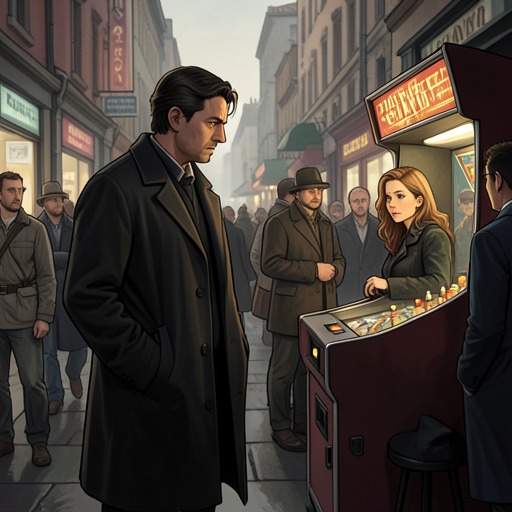
The bar’s billiard table also preserves an older pattern of use. Painters and motormen continue to challenge each other to games, even after a new clientele arrives; Pilade adds a pinball machine as the room changes around them. The additions do not erase the original bar. Instead, old and new forms of leisure occupy the same space, much as different generations and social groups share its tables.
On one evening Casaubon sees the bar as an image of a golden age: a bearded cotton-mill owner in a parka plays cards with a future fugitive from justice in a double-breasted suit. The changing meaning of the beard sharpens the scene. Before the early 1960s, Casaubon recalls, beards had been associated with fascism; by 1968 they signalled protest, and in the early 1970s they were becoming an ordinary personal choice. A beard could be a mask, but even a real beard could disguise its wearer: outward appearance no longer reliably disclosed political allegiance. The bar’s unlikely pairing gives that ambiguity a human, comic form.
Casaubon, Belbo, and the Templars
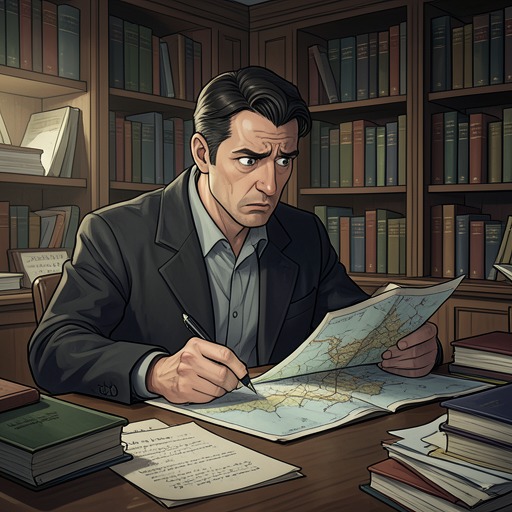
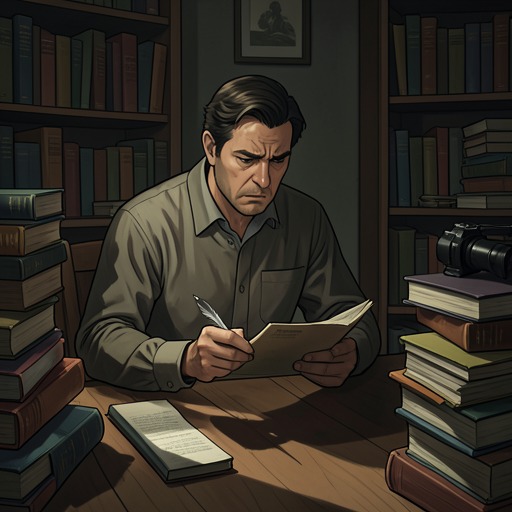
Casaubon’s research on the Templars brings him to Pilade’s and to Jacopo Belbo. He is writing a thesis on the Templars’ trial, having begun with outrage at a prosecution in which circumstantial evidence helped send the Templars to the stake. His commitment to primary sources sets him against occult enthusiasts who continued to search for the order after its dissolution. At the bar, however, the subject becomes the means of an encounter: Casaubon first gets to know Belbo there toward the end of 1972.
Belbo later tells Casaubon that someone has left him a manuscript about the Templars. He calls its author a lunatic, though one with a human face, and says the book begins reasonably enough. He invites Casaubon to visit his office on Via Sincere Renato, explaining that Casaubon’s assessment would benefit him more than it would the visitor. Asked what makes him trust Casaubon, Belbo replies that he does not claim to trust him yet; if Casaubon comes, he will, because he trusts curiosity. The invitation extends the bar’s informal exchange into a relationship built around investigation rather than assured agreement.
Storytelling and significance
Pilade’s also gives Casaubon a place to speak himself into an unexpected feeling. On an evening when Belbo pays for his fifth whiskey, Casaubon realizes that he has been dreaming aloud about the Templars, and doing so with genuine emotion. His tale has moved Dolores to tears, while Diotallevi, after ordering a second tonic water, gazes toward the ceiling and imagines the Templars as many things at once: lost souls and saints, horsemen and grooms, bankers and heroes. Belbo’s concise response is to call them remarkable and ask Casaubon whether he loves them. Casaubon answers that working on a thesis about them can make a person love even the syphilis-causing spirochete under study.
The scene complicates Casaubon’s earlier insistence on scholarly detachment. The bar does not resolve the difference between historical evidence and the stories built around it; instead, it lets sober inquiry, alcohol, imaginative narration, and sympathy coexist in one conversation. As a recurring social setting, Pilade’s is thus more than a backdrop to Casaubon and Belbo’s first connection: its crowded, shifting room gives the novel a compact stage on which political identities blur, curiosity opens a door, and scholarship begins to shade into attachment.